What Is the Actual Price Per Square Foot for a Custom Home in Oklahoma?
Why this common metric is misleading — and what you should ask instead.
Schedule a 15-Minute CallIn This Guide
- 1. Cost per square foot is a terrible metric
- 2. How do size and features affect price per square foot?
- 3. Why do bigger houses have a lower cost per square foot?
- 4. Why doesn't shrinking a house plan make it less expensive?
- 5. How do you compare price per square foot between builders?
- 6. Why is price per square foot a bait-and-switch?
- 7. How do you avoid the price per square foot trap?
- 8. One more question that will help you find a skilled builder
- 9. Final thoughts
When building a home there's a lot to consider. The location, the timeline, what features you want. But the biggest question on a home buyer's mind is always cost, and that's often the question with the most difficult answer.
Unfortunately, too many builders have an all-too-ready answer for this question, and this answer actually tells you more about the builder than about the house they're proposing to build you. That answer is the house's price per square foot, and it's a deeply problematic answer meant to trick rather than inform you.
Before you begin comparing builders by the prices per square foot they're quoting you, let's explore how these costs are determined, what factors are at play that can skew a home's price, and how you can truly compare builders to pick the best one for you.
(Planning to build on land you already own? Site work is the other half of the cost story — our guide to building on your land in Oklahoma covers it.)
Too many consumers go into the home building process relying on builders who are more interested in making money off of them than working as partners to create their dream home. With the information I'm about to share with you, you will be able to buy your custom Oklahoma home with confidence without falling for bad sales tactics or paying for a builder's incompetencies.
Cost per square foot is a terrible metric!
If you are looking for a contractor to build you a custom home, there's a good chance you'll come across one or more who will quote you a price based on a home's price per square foot. This easy-to-calculate number is the house's overall price divided by the size of the house and is meant to give the buyer a sense of the home's value compared to other homes.
Unfortunately, this simple metric is a terrible one to compare houses with because it leaves so much out.
Sounds absurd, right? That's how it sounds when builders quote a price based solely on a square foot. It's a chicken-and-egg sort of problem. Maybe you've already come up with the perfect house plan. How can you know how much a house will cost to build without adding up all the elements of that particular plan? Why is one square foot worth $125? Is each square foot worth the same amount? It doesn't make any sense, and that's because builders who price per square foot aren't really sure what it's costing them to build a house.
Pricing per square foot is backwards, and it almost always leads to a bad deal for you. A builder who's pricing the home that way is basically pricing it at a range where he's comfortable that he can make a good profit. What gets sacrificed in that equation is your budget.
How do size and features affect price per square foot?
The question of price per square foot in building a new home comes up often and the explanation of how that price is determined can be confusing. Because of this, I wrote this case study comparing 2 homes my company built in 2016 to give you, the potential home building client, insight into the price per square foot game my industry has forced everyone to play.
Oklahoma Case Study
I picked 2 houses of 2 different sizes and 2 very different configurations to show the effect of square footage on the price per square foot as well as the way configuration affects the price of the whole house, regardless of square feet.
House #1
- 2,908 sq ft conditioned space
- 3 car garage
- 4 bed / 2.5 bath
House #2
- 3,670 sq ft conditioned space
- 3 car garage
- 6 bed / 3.5 bath
Cost comparison by overall item cost
| Category | House #1 (2,908 sf) | House #2 (3,670 sf) |
|---|---|---|
| Structure | $96,646 | $104,833 |
| Mechanicals | $34,311 | $40,557 |
| Trim, cabinets, paint | $24,875 | $31,937 |
| Countertops, flooring | $24,706 | $20,311 |
| Land development | $25,600 | $14,432 |
Cost comparison by item cost per square foot
| Category | House #1 (2,908 sf) | House #2 (3,670 sf) |
|---|---|---|
| Structure | $32.55 | $28.58 |
| Mechanicals | $11.80 | $11.05 |
| Trim, cabinets, paint | $8.55 | $8.70 |
| Countertops, flooring | $8.50 | $5.53 |
| Land development | $8.80 | $4.89 |
As you can see, everything except trim/cabinets/paint cost more per square foot in House #1. As the size of the house goes up, the price per square foot goes down.
Land Development
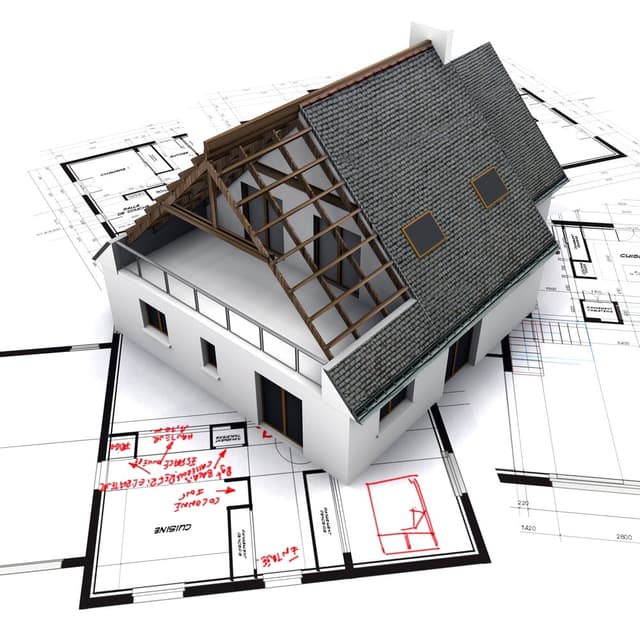
Note that the Land Development category cost nearly twice as much in House #1 than House #2 — that's a category that is totally unrelated to the size of the house. Whatever it costs to prep the land (dirt work, well, septic system, hauling off trees and/or debris, etc.), is what it costs. If you have lots of square feet to spread that cost over, then you'll have a lower cost per square foot. It will show up as a number in the cost per square foot calculation, but is irrelevant as a comparison between 2 houses.
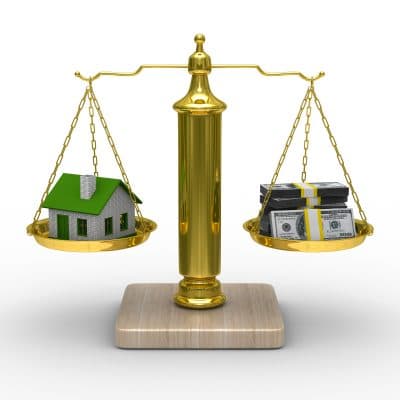
Why do bigger houses have a lower cost per square foot?
In theory, looking at the cost per square foot when building, buying, or selling is an easy way to compare one house to another. It's like looking for the cost per ounce when deciding what size of mustard to buy at the grocery store, right?
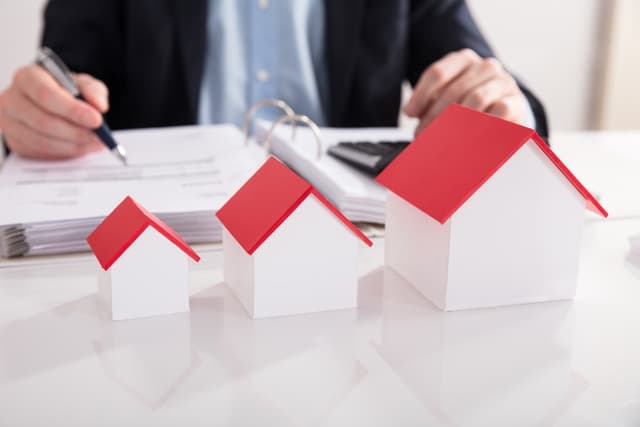
Not exactly. When it comes to houses, larger houses generally have a lower cost per square foot because the bigger the house plan, all other things being equal, there are more square feet to spread the cost over.
Let's say you have a $40,000 kitchen planned for your dream home. Put that kitchen in a 2,000 sq ft house — it costs $20 per square foot. Put it in a 4,000 sq ft house — same exact kitchen now costs $10 per square foot.
Here's an insider secret: the last square foot is the cheapest square foot. Adding 300 square feet of strictly living space requires only slab, frame, roof, drywall, paint, and carpet — the cheapest kind of square footage to build.
This is how builders decrease the price per square foot while increasing the overall price, making it appear that the larger house is ultimately the better value. This practice skews the price per square foot and makes it a useless tool for consumers trying to compare home values.
Why doesn't shrinking a house plan make it less expensive?
All too often, someone falls in love with a house plan that's well beyond their budget. And then they ask, “Can I shrink this house plan and make it less expensive?”
The answer? No, you can't.
Remember — the last square foot you build is the cheapest. That's also the first square foot you take out when shrinking. A builder quotes you $200,000 for a 2,000 sq ft home ($100/sf). Your budget is $180,000. If you cut 200 sq ft, you'd expect to save $20,000 at the same $100/sf rate.
Wrong.That $100/sf is the average cost across ALL square feet. Your $1,200 oven takes up six square feet — that's $200/sf. Are you going to take out the oven? The $8,000 air conditioner? No. You're removing lumber, concrete, carpet, and shingles — the cheapest stuff.
If you're budget-conscious and want to build a new home, start with a design that's smaller than what you can afford. Making a plan bigger is less expensive per square foot, since you're adding inexpensive living space. The math now works in your favor.
How do you compare price per square foot between builders?
Because houses aren't like cars (you can't go to 3 different builders and look at the exact same make and model), it's really difficult to do any kind of meaningful comparison.
As my dad says, “Let me throw the Hope Diamond in the bathtub and then let's figure the price per square foot.” The Hope Diamond is valued at $200+ million. Put it in a 2,000 sq ft house and the value increases by $100,000 per square foot. For that price, should the house come with a garage door opener?
Items that affect price per square foot
- Land:If the land cost is hidden in the total, a $20,000 lot adds $10/sf to a 2,000 sf house, while a $30,000 lot adds $15/sf. That's a $5/sf difference before you've even looked at the houses.
- Garage size:A typical garage stall costs around $10,000. A 2-car garage adds $10/sf, a 3-car adds $15/sf to a 2,000 sf house.
- Covered porches and patios:At about $38/sf, a 12x12 patio adds about $2.75/sf to a 2,000 sf home.
- Cabinets:At $5,500, cabinets contribute $2.75/sf in a 2,000 sf house but only $1.83/sf in a 3,000 sf house.
- Heat and air:A 4-ton AC at $6,800 costs $3.40/sf in a 2,000 sf house and $3.78/sf in an 1,800 sf house.
The only way to get the exact number is to find the builder you like and trust, work through the process of designing a house plan, specifying the features, and adding it all up. Otherwise you're just going to fall for an unscrupulous builder's tricks.
Why is price per square foot a bait-and-switch?
There's a dirty little secret about price per square foot that the building industry would prefer I didn't share: price per square foot is a game home builders use to reel you in.
In fact, I used to play it too — until I realized I was doing my customers a disservice.
Here's how the game works:
- The builder advertises a really low price per square foot.
- You sit down and start designing your actual dream home, getting emotionally invested.
- You spend many hours going back and forth on design details. You're 100% emotionally invested.
- The builder comes back with a price — and the $85/sf he reeled you in with is now a more realistic $115/sf. You're too far in to start over.
We don't buy our cars by the pound or our clothes by the thread. Why use a commodity price like price per square foot for something as dear to us as our forever home? Commodity pricing works for corn and potatoes — but for your home?
How do you avoid the price per square foot trap?
Seek out a builder who listens first before giving you an unfounded price per square foot quote. What goes into your house should be your decision.
Be wary of the builder who has a ready answer for “How much are your homes per square foot?” Whatever the number is, there's no way it can be based on your vision.
Look for a builder who is committed to your needs and wants and to staying within your budget. Ask about various financing options — can your prospective builder help you work through creative solutions?
One more question that will help you find a skilled builder
One of the most common questions people ask builders is, “What's the smallest home you'll build?” People ask because they've been told by other builders that their home is below the minimum square footage.
My dad has been building in central Oklahoma since 1964, and he's always told me that it's far more difficult to build a small home than a big one. Here's the dirty little secret: the same subcontractors working on entry-level homes work in high-end neighborhoods too.
The difference isn't in the skill set of the subcontractor — it's in the skill set of the builder. The smaller the home, the less room there is for error. A builder who has a minimum square footage may simply lack the confidence and experience to build with few to no errors.
Even if you are looking to build a large house, asking a builder about their minimum square footage can give you a clue as to their skill level.
Final thoughts on why cost per square foot is a bad metric
How much is the cost per square foot for a new house? Great question. Tough to answer.
There's a lot more to pricing a house than meets the eye, and it is easy for a builder to give a manipulative cost per square foot to lure you into a sales pitch. But this is your dream home and it should be all about you.
If you want an accurate quote for a custom house, you need to find an accurate builder — one who recognizes that there aren't always simple answers for simple questions and is willing and able to work with you to find the honest answer. You need a builder who puts your needs and wants first and has the skills to deliver them within budget.
Download the PDF Version
Save this guide for later reference. Share it with your spouse, your lender, or anyone helping you make this decision.
Download PDFMore Resources
Ready to Talk Real Numbers?
No price per square foot games. Just an honest conversation about your budget, your land, and your dream home.